Riga accelerates its green transformation
52 ELECTRIC SOLARIS BUSES NOW IN THE CITY FLEET
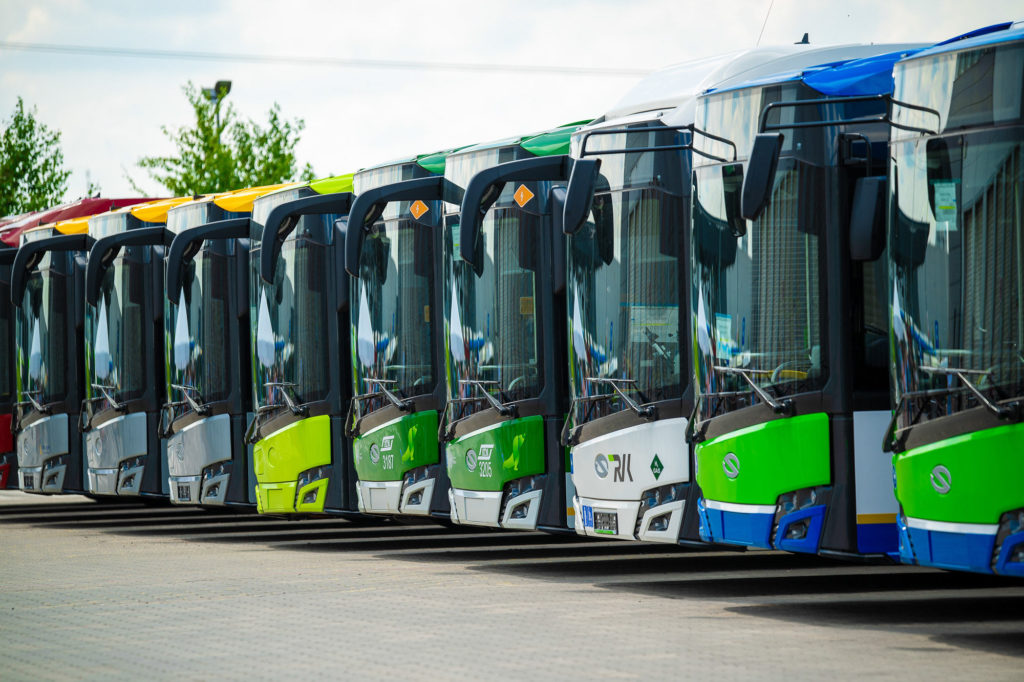
Riga continues to push forward with the transformation of its public transport system. In June 2025, the municipal operator, Rīgas Satiksme, received another 17 new zero-emission Solaris Urbino 12 electric buses. This marks another phase in the implementation of a contract signed with the manufacturer in 2022. After completing these deliveries a total of 52 Solaris e-buses will be operating on the streets of Latvia’s capital, aligning with the city’s ambitious strategy for sustainable mobility.
Recent investments in zero-emission buses are part of Riga’s comprehensive transport plan, which aims to shift the city toward environmentally friendly solutions that benefit both residents and the environment. Since 2022, the city authorities, in cooperation with the Ministry of Transport, have been consistently implementing ambitious goals to reduce the negative impact of transport on air quality and to develop integrated public transport services that better meet residents’ needs.
Riga has the necessary funding to achieve these goals—under the EU’s Recovery and Resilience Facility (RRF), Riga and the Pieriga region have received a total of €295 million.

A GREEN DEVELOPMENT PATH
In July, Riga’s authorities announced a new 10-year plan to expand the city’s transport network. Over the next decade, the system is expected to grow to reach every corner of the city, ensuring that all residents can find safe and convenient connections—wherever they are. The overarching aim is to reduce emissions and achieve climate neutrality, with the city consistently promoting sustainable, eco-friendly solutions.
NEW ROUTES, BIKE BATHS AND REGIONAL CONNECTIONS
In the coming years, Riga will undergo significant changes in transport infrastructure. Plans include expanding the network of bike paths, which currently cover mainly central districts. New public transport routes will also reach areas outside the city center, creating convenient connections between distant districts and even neighboring towns. EU Recovery Fund resources will enable the construction of new transport networks between Riga and regions such as Carnikava, Saulkrasti, Dreiliņi, Ogre, Jēkabpils, Tukums, and Bolderāja. New bus lanes are also planned to improve public transport efficiency in the city center.

SOLARIS BUSES TRANSFORMING THE CAPITAL'S TRANSPORT
The 17 Solaris Urbino 12 electric buses delivered in recent weeks as part of the extended 2022 contract fit perfectly into the city’s sustainable transport strategy. These new vehicles will serve various parts of the capital and will be charged at seven fast-charging stations launched in 2023 during the first delivery of 35 electric Solaris buses.

The latest vehicles will hit the streets of Riga before the end of summer. These are models similar to the previous 35 electric Urbino buses—12-meter, low-floor vehicles well known across European markets. Each bus is equipped with Solaris High Energy batteries with a total capacity of 280 kWh. The vehicles can be charged both via a plug-in connector and an inverted pantograph. This type of pantograph is mounted on the charging station and lowers onto the bus during charging. Propulsion is provided by a central traction motor, and the maximum passenger capacity is 72 people.
Compared to the previous delivery, the new buses feature enclosed driver cabins for enhanced safety and working comfort. The June delivery includes a full suite of safety systems compliant with the GSR2 standard, including blind spot warning and advanced collision avoidance systems. Traditional side mirrors have been replaced with cameras under the eMirror system.
Currently, the zero-emission Urbino buses operate on 14 city lines. Once the latest vehicles are in service, Riga will have a total of 52 electric buses from Solaris on its streets.

Latest articles
 History of Solaris - from the first low-floor buses in Poland to a global manufacturer of zero-emission vehicles
 A 2025 was a year of intense growth for us - check out how many buses we delivered, what the…
 Solaris' new retrofit service upgrades older electric buses with cutting-edge batteries, elevating their performance and durability to today’s standards.