
EPD:
MEASURING THE REAL ENVIRONMENTAL IMPACT OF ELECTRIC BUSES
Sustainable transport today means far more than zero tailpipe emissions. Increasingly, the true environmental impact of vehicles is assessed across their entire lifecycle – from raw material extraction, component manufacturing and vehicle production, through operation and servicing, to recycling at the end of their service life. One of the tools enabling reliable measurement of this impact is the independent Environmental Product Declaration (EPD).
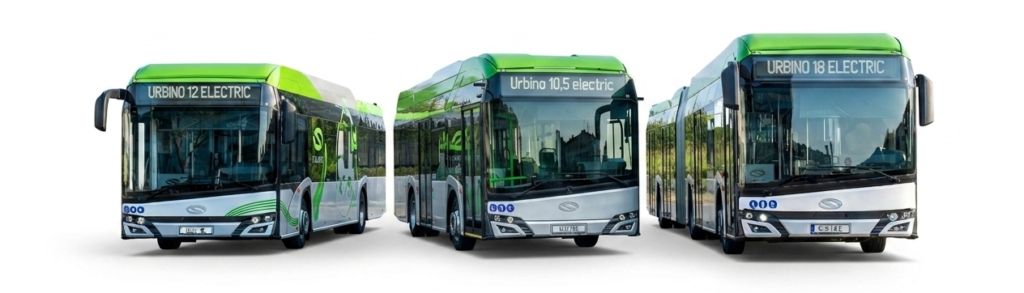
Solaris has recently obtained additional EPDs – this time for three modular-drive electric bus models: the Urbino 10,5 electric, Urbino 12 electric and Urbino 18 electric. The documents are based on measurable data and a detailed Life Cycle Assessment (LCA).
EPD – VERIFIED ENVIRONMENTAL DATA
Solaris has recently obtained additional EPDs – this time for three modular-drive electric bus models:
- Urbino 10,5 electric
- Urbino 12 electric
- Urbino 18 electric.
The documents are based on measurable data and a detailed Life Cycle Assessment (LCA).
An Environmental Product Declaration is an internationally standardized document developed in accordance with ISO 14025 requirements and specific Product Category Rules for buses and coaches. In practice, this means that a vehicle’s environmental impact is assessed according to common, transparent principles and independently verified by third parties.
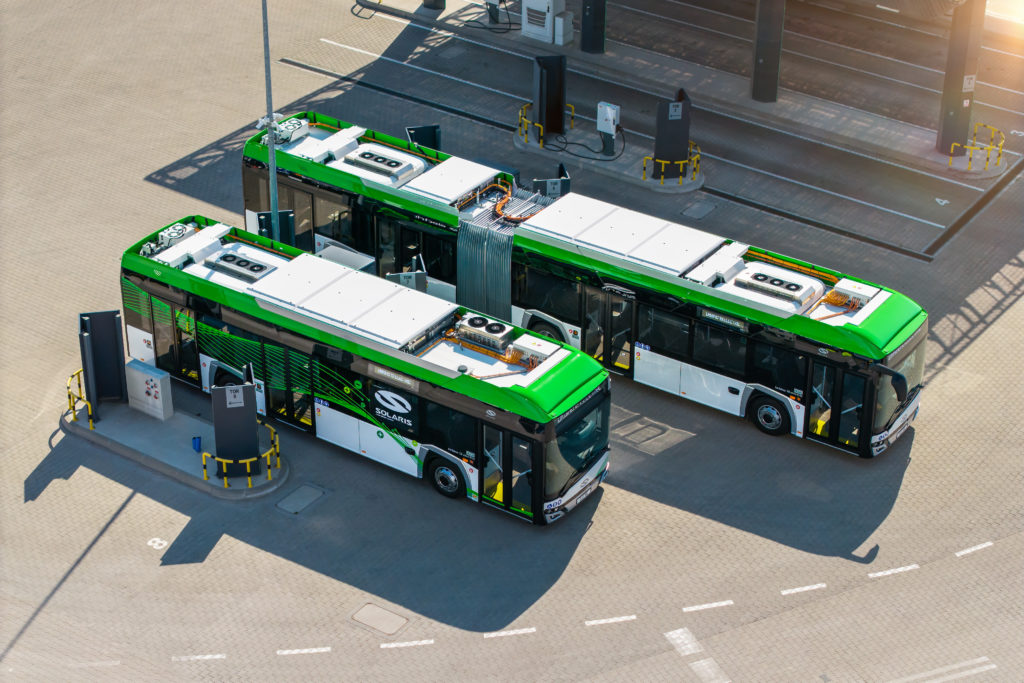
The assessment covers the entire lifecycle of the bus – from raw material extraction and component manufacturing, through the production process and daily operation, to recycling and end-of-life treatment. As a result, operators and city representatives can evaluate vehicles not only in terms of technical parameters or operating costs, but also in terms of their actual environmental impact.
NO HIDDEN EMISSIONS
The lifecycle assessment approach goes far beyond operational emissions alone. EPDs cover the entire value chain related to vehicle production and operation, including:
- raw material extraction,
- battery and component manufacturing,
- production and assembly processes,
- vehicle operation and energy consumption,
- servicing,
- recycling and end-of-life treatment.
For electric buses, this broader perspective is particularly important. While battery-electric vehicles eliminate tailpipe emissions in cities, their total environmental footprint also depends on the way electricity is generated, the origin of materials used in production, and the level of recyclability.
This is why EPDs also take into account the impact of national energy mixes on the environmental performance of vehicle operation. The results show that the use of renewable energy sources can significantly improve a bus’s environmental efficiency throughout its lifecycle. This is another argument demonstrating how important it is to combine fleet electrification with the energy transition.
MEASUREMENT UNDER REAL OPERATING CONDITIONS
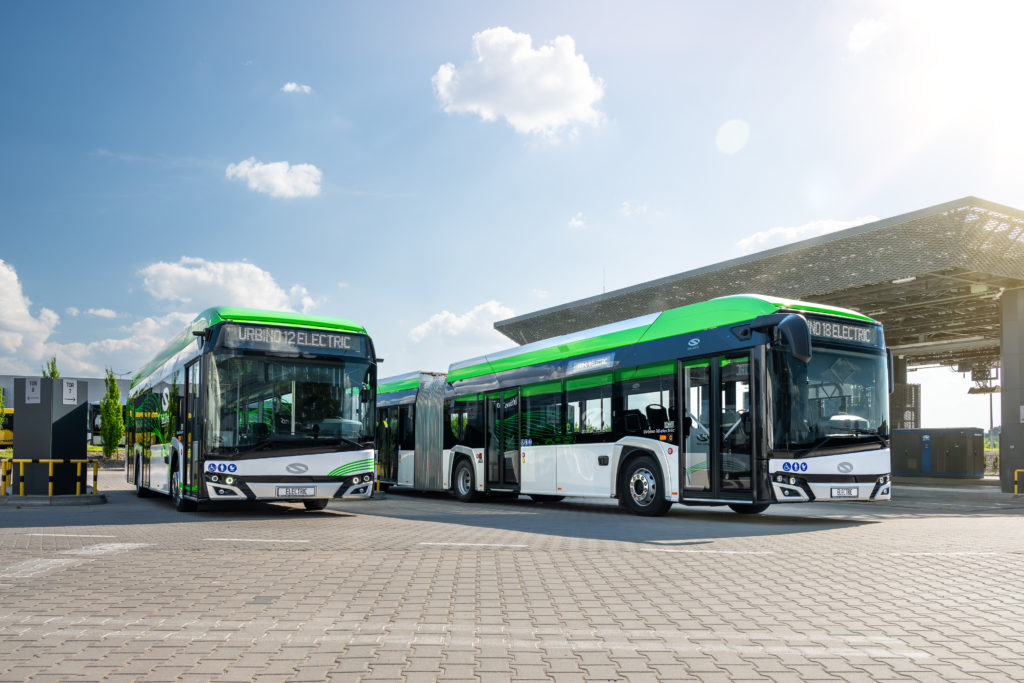
EPDs are based not only on laboratory assumptions, but also on real operational data. Energy consumption calculations for Solaris electric buses were supported by information from the eSConnect system – a fleet monitoring and management tool.
This makes it possible to better reflect actual vehicle operating conditions, including energy consumption related to heating, air conditioning and onboard systems.
The analyses also include an assessment of recyclability and material recovery potential. Depending on the model, the recyclability rate of Solaris electric buses is approximately 96–98%. These high figures align with circular economy principles and help reduce the environmental impact of vehicles after the end of their operational life.
DATA SUPPORTING DECISIONS OF MODERN CITIES
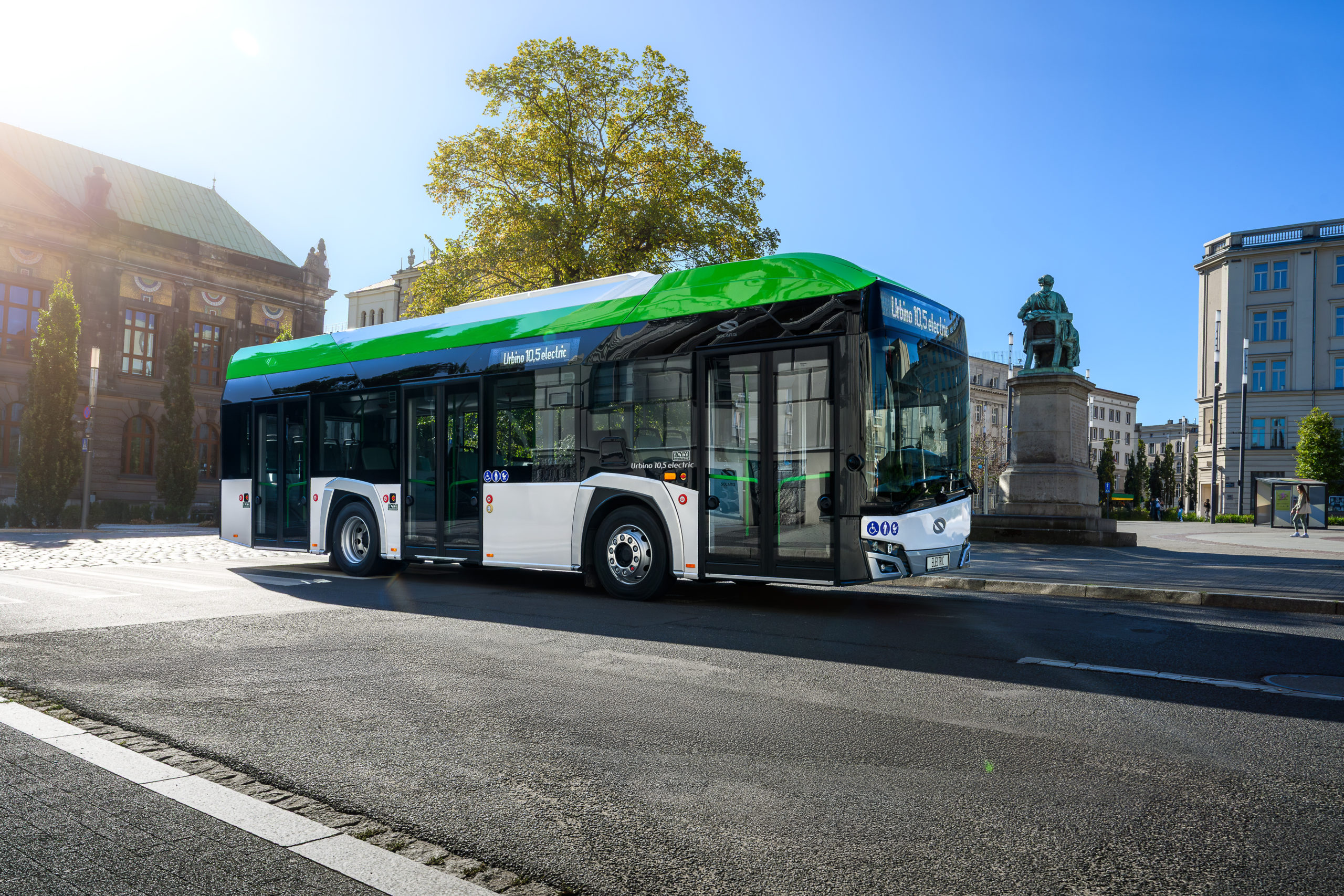
Environmental declarations are becoming an increasingly important tool in tender procedures and ESG reporting. For public transport operators and local authorities, they provide:
- standardized environmental indicators,
- independently verified data,
- support for sustainability reporting,
- compliance with increasingly demanding tender criteria.
Solaris is systematically expanding the portfolio of vehicles covered by independent environmental assessment. EPD documents had previously also been prepared for the Urbino 18 hydrogen, the Urbino 18 electric, and the Urbino 12 hybrid models.
The declarations are available in The International EPD® System database:
Latest articles
 Solaris develops its aftersales services around three pillars: an efficient and responsive service network, spare parts logistics, and digital tools.
 When the first low-floor bus rolled out of Bolechowo in 1996, few could have imagined that three decades later the…
 One of the hottest Sundays of the year became a special occasion to bring together our employees, their families and…


